



Study the texts that matter at school—and learn to think beyond a memorised essay
Secondary English students are often assessed on texts chosen by their school. A student studying Macbeth needs support that connects to Macbeth; a generic lesson on an unrelated novel may do little to help with their next assessment.
We tailor lessons to the texts and tasks students are working on at school. Whether the prescribed text is Shakespeare, The Cay, Lord of the Flies, Of Mice and Men or another work, students receive support that is relevant to their classwork while developing skills they can use with future texts.
Built around each student’s schoolwork
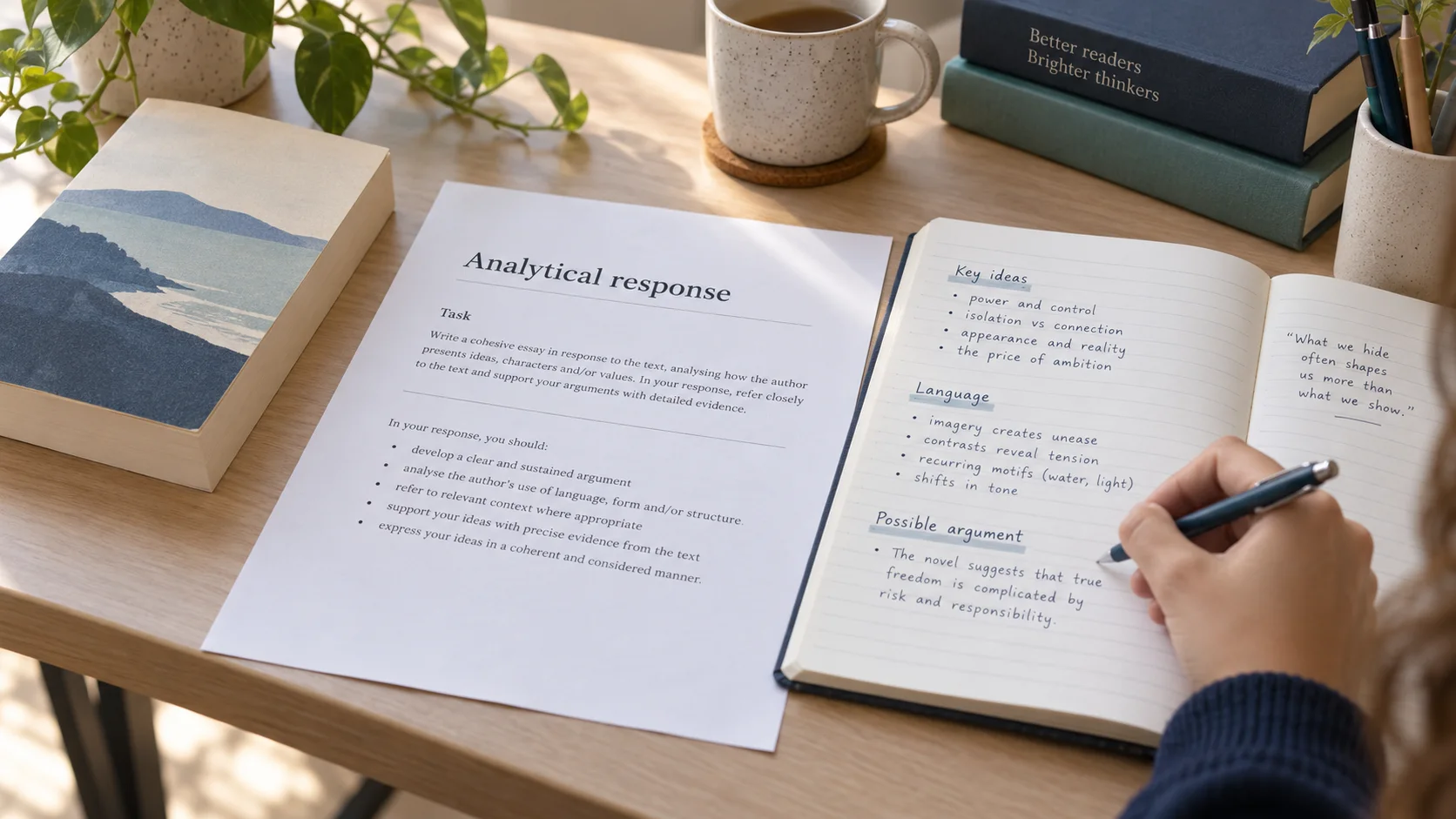
We begin by identifying the student’s current text, the focus of their school unit and any upcoming assessment. Lessons can then address the passages, themes, techniques and writing demands that are most useful to that student.
This means students are not placed into a class working through unrelated content when they need help understanding their own prescribed text. We also teach the broader skills behind the task, so support for one novel or play strengthens their ability to study the next one.
Our approach to literature
Begin with context
Original learning example
Context shapes interpretation
Original context
- A town faces a long drought.
- Residents conserve every drop.
Show approach
Original line and question
- “The well held only a silver echo.”
- What does the image suggest?
- How does context deepen the meaning?
Before closely analysing a text, we introduce the author and the historical, social or literary context that helps students make sense of it. Students consider the ideas, expectations and concerns that shaped the work and its original audience.
Context gives students a starting point for their own questions. Why might a character behave this way? Why would an author present a conflict in this form? What might an audience at the time have noticed?
We then move into the text with those questions in mind. Context supports interpretation; it does not replace careful reading of the words on the page.
Understand how the writing works
Original learning example
Explain the effect of a choice
Original passage
- “The streetlights blinked awake,
- one by one, against the rain.”
Show approach
Purposeful annotations
- “Blinked awake” personifies the lights.
- “One by one” slows the pace.
- Together they create a quiet mood.
Students examine the choices an author makes: structure, characterisation, imagery, dialogue, tone and other stylistic and language features. They learn to explain how a choice creates meaning and why it is effective in a particular moment of the text.
Our aim is for students to understand evidence, not simply collect quotations. When they know what a passage is doing and how it works, they can select and analyse relevant evidence for different questions instead of trying to reproduce a memorised paragraph.
Practise analytical writing extensively
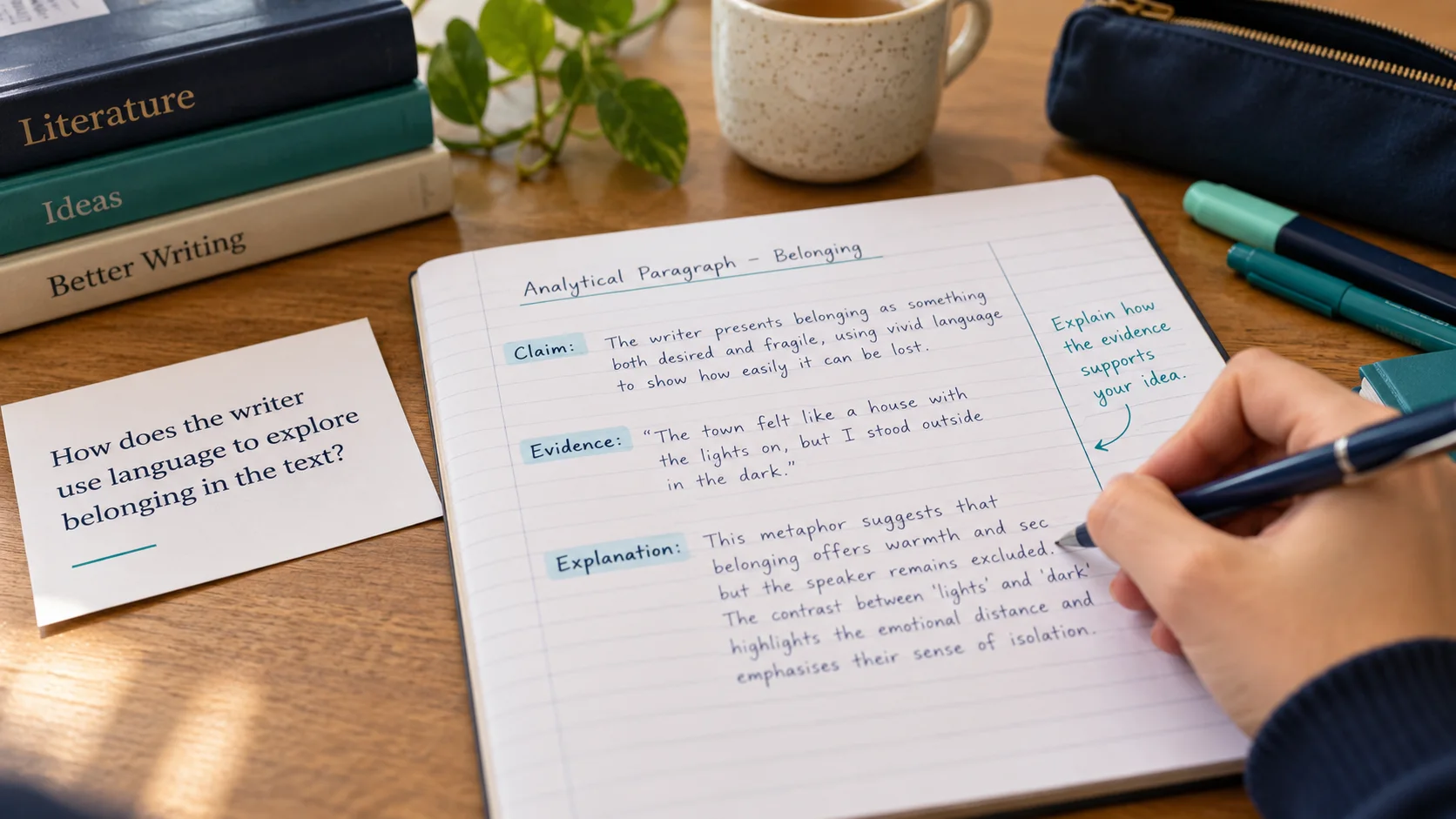
Understanding a text is only part of the task. Students also need practice turning their ideas into clear analytical responses.
We provide a wide range of questions and guided writing activities. Students practise unpacking a question, forming an argument, choosing evidence, explaining techniques and linking their analysis back to the task. They write paragraphs and extended responses, receive specific feedback, and revise their work.
As their confidence grows, students tackle less familiar questions with less scaffolding. This gives them hands-on experience applying their understanding rather than relying on a prepared essay.
What students work towards
Students work towards reading literature with curiosity, explaining how an author’s choices shape meaning and writing analytical responses that answer the question they have actually been asked.
By connecting lessons to school texts while building transferable reading and writing skills, we help students prepare for their current assessments and become more independent readers and writers.