




Exam strategy, part one: plan where to spend your time
A student can know the content and still leave an exam feeling that the paper got away from them. They may spend too long on one difficult question, then rush through questions they could have answered well. Preparation matters, but so does deciding how to use the time available.
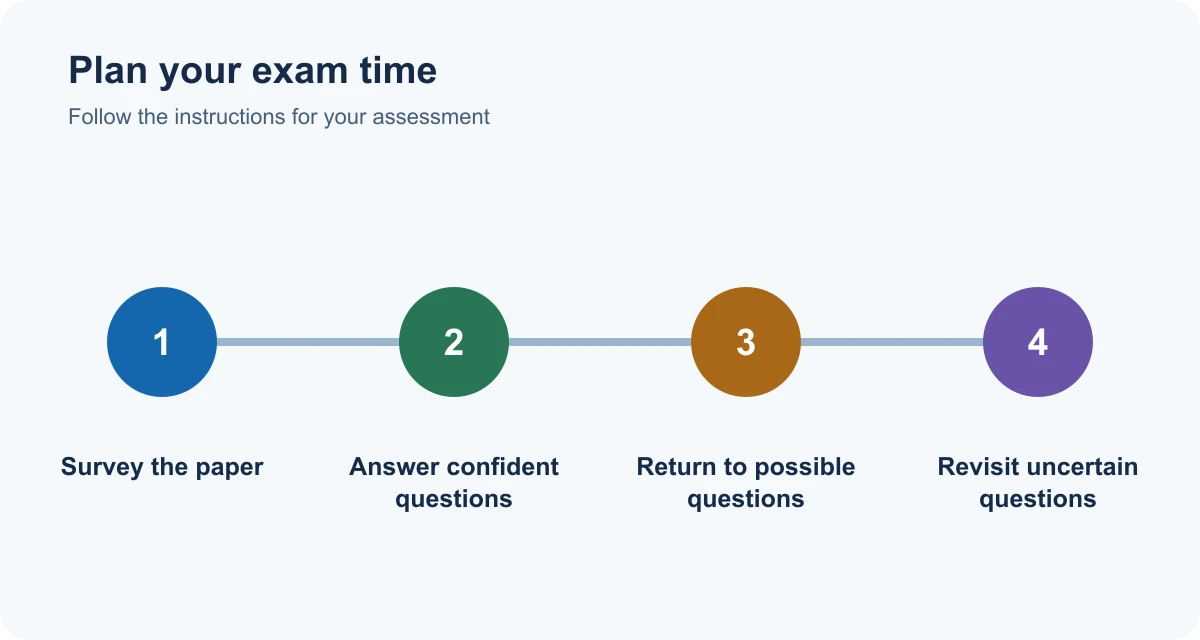
One useful habit is to survey the paper before starting to write, when the exam instructions allow it. The aim is to make a quick plan: which questions can I answer confidently, which will need more thought, and which should I leave until later?
Sort the questions before you commit your time
As you read, sort questions into three working groups:
- Confident: You know how to answer these and can make a start promptly.
- Possible: You recognise the topic or can see a partial approach, but will need more time.
- Uncertain: You cannot yet see a workable approach.
This is a quick judgement, not a prediction of the final mark. A question might move from “uncertain” to “possible” after you have answered others and settled into the paper. The purpose is to avoid giving the first difficult question all your attention simply because it appears first.
Think of time as a limited resource
The choice resembles a basic investment decision: when resources are limited, decide where they are most likely to produce a useful return. In an exam, the limited resource is time. Starting with questions you can answer confidently may help you secure available marks and build momentum. You can then return to questions that need more thought and, if time permits, attempt those that initially seemed out of reach.
This is a flexible order, not a reason to ignore difficult questions. Check the marks and time available, follow any required answer order, and revisit questions rather than spending so long on one that you cannot finish the rest of the paper.
Use reading time to make a plan
If an assessment provides a separate reading period, first check its instructions. Where writing or working out answers is restricted, use that period to understand the whole paper: scan its sections, notice instructions and mark values, make a quick mental priority list, and decide where to begin once answer time starts. Avoid getting absorbed in solving one question while you have yet to see the others.
If there is no separate reading period, a brief survey at the start may still be worthwhile. Keep it proportionate to the length of the exam. The goal is to gain an overview quickly enough to leave adequate time for answering.
Practise the decision, not just the content
This habit becomes more useful when students rehearse it with practice papers. Before answering, give yourself a short time to scan the paper and sort the questions. Then follow your plan under timed conditions. Afterwards, look at where your time went: Did you spend too long on one question? Did a question you labelled “uncertain” become manageable later? Did your first pass take longer than it needed to?
With practice, students can get faster at reading the paper, estimating what they can do, and adjusting their plan as they work. Strong exam performance still depends on understanding the subject. A sensible plan helps students show more of what they know within the time available.